SAN SALVADOR, El Salvador, September 27, 2026 — World Tourism Day 2026 is being officially celebrated today in El Salvador under the theme “Digital Agenda and Artificial Intelligence to Redesign Tourism.” As government, private-sector and technology leaders focus on artificial intelligence, digital identity and the future of travel, another question is emerging: Can World Tourism Day become a platform that truly unites the entire tourism industry — governments, businesses, workers and communities — around technology, prosperity, human rights and peace?
WTTC President & CEO Gloria Guevara says AI and Digital Identity are already redefining how the world travels. Next month, that conversation moves to Malta, where more than 1,000 delegates from over 100 countries, including more than 200 CEOs, senior executives and government leaders, are expected for the WTTC Global Summit. Meanwhile, voices from the United Nations, El Salvador, Iran, Guyana, Jamaica and Seychelles are emphasizing another message: technology may redesign tourism, but people must remain at its heart.
World Tourism Day 2026 comes at a difficult moment
Since 1980, the United Nations World Tourism Organization, today UN Tourism, has celebrated World Tourism Day every September 27. UNWTO established the observance, with the first World Tourism Day held in 1980.
eTurboNews has covered the occasion since September 27, 2000, reporting not only on tourism’s achievements and economic importance, but also on the responsibilities that come with being one of the world’s most powerful people-to-people industries.
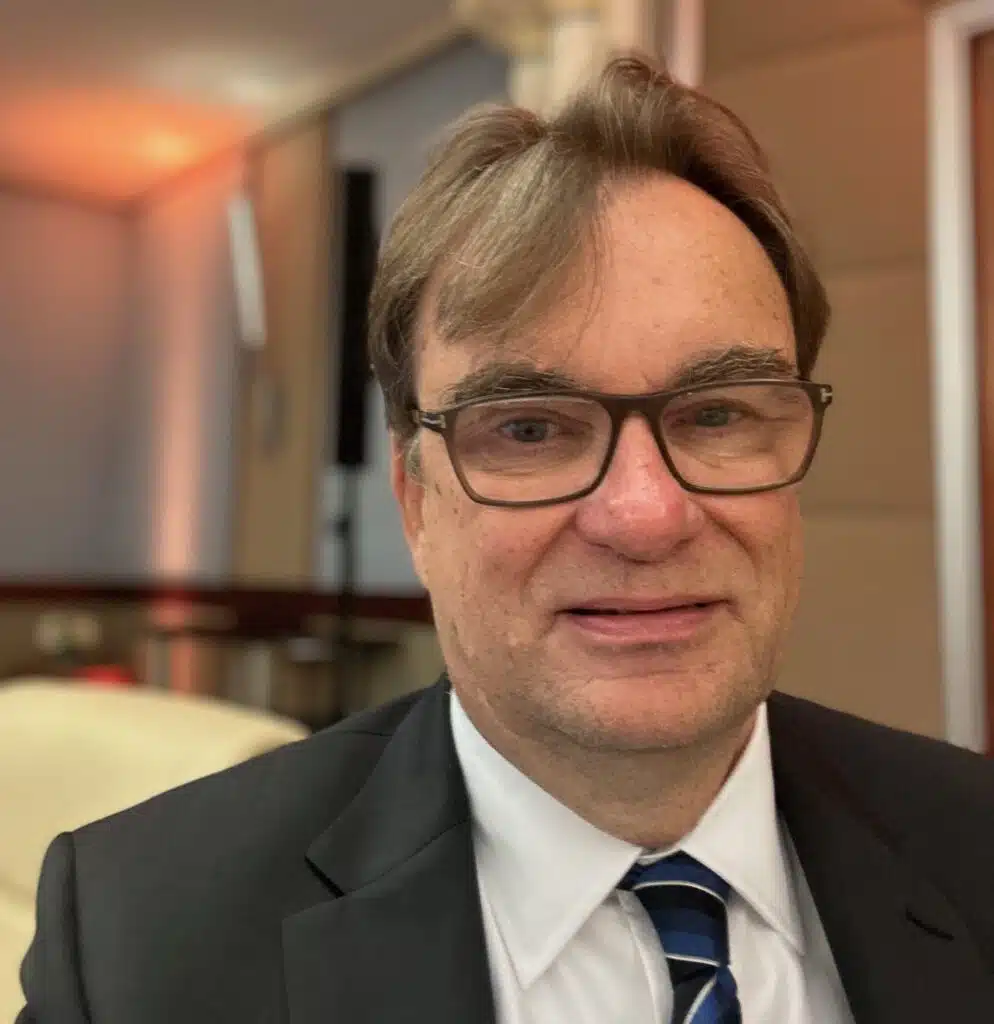
Juergen Steinmetz, publisher of eTurboNews and chairman of the World Tourism Network, says World Tourism Day 2026 arrives at a particularly consequential moment.
“While tourism seems to be reaching new heights in some parts of the world, World Tourism Day 2026 comes under the shadow of wars, uncertainty, political madness and fear for millions of people, including so many who work in our industry.
“The message of tourism and peace cannot remain just a slogan. It is a responsibility. Travel and tourism is one of the world’s most powerful economic and human forces. We have to use this enormous influence to give sanity, peace, dialogue and human rights a stronger voice.
“There has perhaps never been a more important World Tourism Day than today.”
But Steinmetz says there is another important point the industry should recognize.
Steinmetz: World Tourism Day belongs to the entire tourism industry
Although World Tourism Day was established by UNWTO, Steinmetz says it should never be viewed as an observance belonging only to one organization, tourism ministries or the public sector.
It is a day for the entire global Travel & Tourism industry.
“World Tourism Day was established by UNWTO, and UN Tourism has an important leadership role in it. But World Tourism Day does not belong only to UN Tourism, and it certainly should not be an observance only for the public sector.”
“Tourism is one industry. It includes governments and tourism ministries, but also airlines, hotels, cruise lines, tour operators, travel advisors, technology companies, destinations, restaurants, guides, SMEs, investors, workers, media and, most importantly, the communities and people who make tourism possible.”
“The purpose of World Tourism Day should be to bring this entire industry together. The ingredients are here in 2026, and WTTC has a particularly important opportunity to help build that bridge between the public and private sectors.”
For Steinmetz, that bridge matters because the defining challenges facing tourism cannot be solved by governments or companies acting separately.
Artificial intelligence is one example. Digital identity and border facilitation are others. Sustainability, investment, aviation connectivity, workforce development, resilience and geopolitical instability all demand public-private cooperation. Peace may require that cooperation most of all.
“If we say tourism is an industry of peace, then everyone has to be at the table. The public sector cannot do it alone, and the private sector cannot do it alone. World Tourism Day should provide that common platform.”
This makes the World Travel & Tourism Council’s participation in World Tourism Day particularly significant.
WTTC: Gloria Guevara puts AI and Digital Identity at center stage

Before turning to the official UN Tourism celebration in El Salvador, the global private sector is delivering a consequential World Tourism Day message of its own.
Gloria Guevara, President & CEO of the World Travel & Tourism Council (WTTC), says the technological transformation is already changing the fundamentals of travel:
“Travel and Tourism connects people, cultures and economies like no other sector. AI and Digital Identity are now redefining how the world travels. The destinations and businesses that lead this transformation will shape the future of our sector.”
Guevara’s message goes to the heart of the 2026 debate.
Artificial intelligence is beginning to influence a trip before the traveler has even chosen a destination. Digital identity and biometric technologies promise to transform airports, borders and other parts of the journey. WTTC itself marked World Tourism Day on X by emphasizing the “social, cultural, political and economic value of Travel & Tourism.”
“Our sector drives 10% of global GDP, supports livelihoods, connects cultures and brings nations closer together.”
WTTC also said AI and digital innovation are increasingly influencing the destinations travelers choose and the experiences they enjoy, while digital standards and biometrics are making journeys safer and more seamless.
Its World Tourism Day conclusion was a call for cooperation: “Together, the public and private sectors can shape a stronger future for Travel & Tourism.”
The economic numbers demonstrate why that cooperation matters. WTTC reported earlier this year that Travel & Tourism contributed approximately US$11.7 trillion to the global economy in 2025, representing 10.3% of global GDP, and supported one in nine jobs worldwide.
An industry with that footprint has influence. And that gives additional weight to Steinmetz’s argument: tourism cannot view itself simply as an industry counting arrivals, hotel nights and revenues. Its economic power also gives it a potentially important voice for mobility, understanding, dialogue and peace.
From World Tourism Day to Malta: Tourism’s decision-makers gather next month
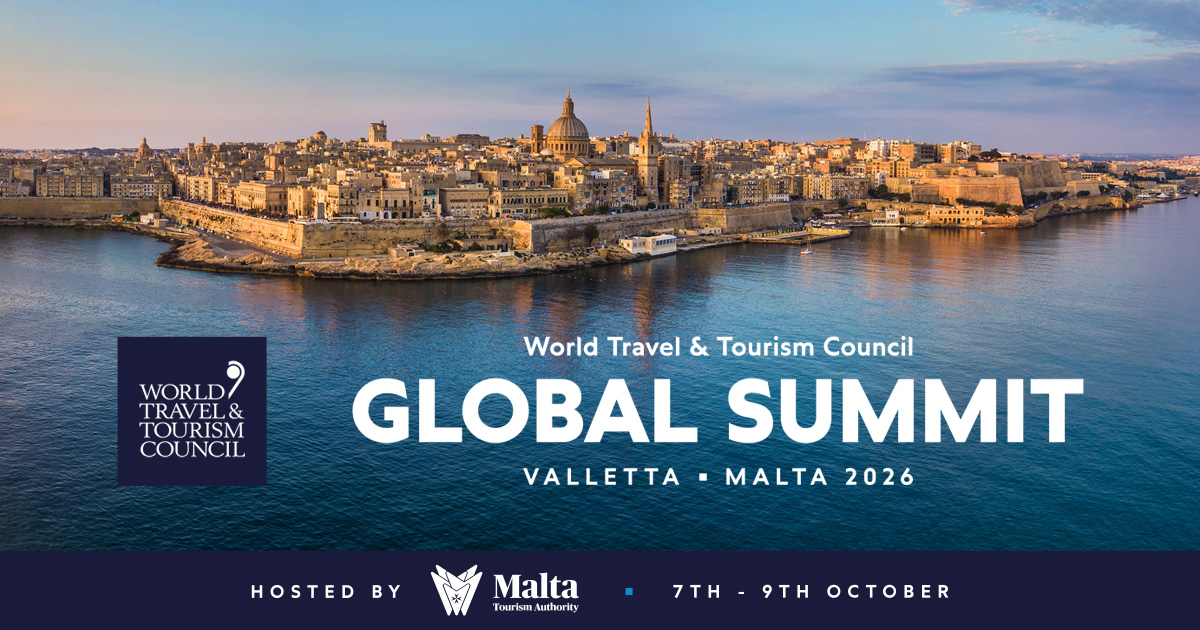
Malta 2026 Global Summit
Learn about the 2026 WTTC Global Summit in Malta and watch online videos of the sessions.
World Tourism Day is only the beginning of this discussion.
From October 7–9, 2026, many of the people making the investment, technology, and policy decisions shaping global tourism will gather in Valletta, Malta, for the 26th WTTC Global Summit at the Mediterranean Conference Center.
The theme is “FUTU[RE]SET: Shaping the Future of Travel & Tourism.”
WTTC describes its annual Global Summit as the most influential event on the Travel & Tourism calendar. The 2026 edition is expected to bring together more than 1,000 delegates from over 100 countries, including more than 200 of the world’s leading Travel & Tourism CEOs, senior executives and government leaders.
“This is the most important event for travel and tourism
Over 100 CEOs and ministers will participate as speakers while the global agenda is being shaped.”
That concentration of decision-makers makes Malta a natural next step in today’s World Tourism Day conversation. Among the business leaders announced for Malta are Hilton President & CEO Christopher J. Nassetta, IHG Hotels & Resorts Global CEO Elie Maalouf, Four Seasons President & CEO Alejandro Reynal, Capital A CEO Tony Fernandes, Trip.com Group CEO Jane Sun and MSC Group Cruise Division Executive Chairman Pierfrancesco Vago.
They will be joined by senior leaders from aviation, hospitality, cruise, technology, finance, investment and destinations, alongside government representatives.
The program is expected to address many of the same forces dominating World Tourism Day: AI, geopolitical change, investment, connectivity, competitiveness, destination development and the changing traveler.
If Guevara is correct that the destinations and businesses leading the AI and Digital Identity transformation will shape tourism’s future, Malta is where many of those leaders will be sitting around the same tables.
It also illustrates what makes WTTC’s role distinctive: bringing private-sector CEOs and government leaders together when neither business nor governments can redesign tourism alone.
El Salvador becomes the center of World Tourism Day
Today, however, the official global focus is on San Salvador.
The World Tourism Day celebration at the Hilton San Salvador brings together El Salvador Tourism Minister Morena Valdez Vigil, Vice President Felix Ulloa by video, UN Tourism Secretary-General Shaikha Al Nuwais and leaders from government, technology, tourism and investment.
The program moves from “Digital Transformation to Human Impact” to a live demonstration of AI-powered destination promotion, followed by discussions about trust, transparency and a human-centered AI future.
Startups are competing in the World Tourism Day Innovation Challenge, while another session examines digital assets and investment around Surf City.
Later, delegates move from algorithms to an actual destination experience with a visit to the La Libertad Port Tourism Complex and El Tunco Beach.
Morena Valdez: The technology is new, but tourism remains human
For Valdez, hosting World Tourism Day allows El Salvador to showcase both its technological ambitions and something far less digital.
“We want to drive technological innovation, AI and digital transformation to achieve a more inclusive and modern tourism sector,” she said.
But her invitation also asks visitors to discover Salvadoran cuisine, traditions, culture and, above all, “the warmth of our people.”
That may summarize the central contradiction — and opportunity — of World Tourism Day 2026. The theme is artificial intelligence. The tourism product remains intensely human.
António Guterres: “Technology must serve humanity”

United Nations Secretary-General António Guterres puts an important warning alongside the excitement surrounding AI. AI can strengthen small businesses, improve services and create new opportunities.
But left unchecked, Guterres warns, it can also funnel travelers toward the same destinations and platforms while leaving other worthwhile places behind. His central message is straightforward:
“Technology must serve humanity.”
Tourism workers, communities and emerging destinations therefore need to participate in shaping what comes next. That requires investment in digital skills, wider access to technology and a commitment to ensuring innovation benefits the people and places that make tourism possible.
Shaikha Al Nuwais: “Progress only counts if it reaches everyone”
UN Tourism Secretary-General Shaikha Al Nuwais sees enormous potential in artificial intelligence — but also the danger of creating another divide.
“Progress only counts if it reaches everyone.”
Properly managed, she says, AI can make tourism more efficient and resilient. But technological transformation cannot result in one group designing the new digital rules while everybody else is expected simply to follow them.
Even tourism’s existing technology remains fragmented. Bookings, payments and data frequently do not communicate effectively.
Her message therefore isn’t simply about more AI. It is about connecting what is disconnected and ensuring technology strengthens livelihoods.
Who decides where the world travels?
One of today’s most relevant discussions in San Salvador asks:
“Beyond the Algorithm: Who Shapes Where the World Travels Next?”
The question goes directly to Guevara’s observation that destinations and businesses leading the technological transformation will help shape tourism’s future. Yesterday, destinations competed for space in brochures.
Then came Google. Next came Instagram, TikTok, YouTube, and influencers.
- Today, travelers increasingly ask AI:
- Where should I spend a week in Central America?
- What Caribbean destination should I discover?
- Where should my company hold its next conference in West Africa?
The destinations returned by the machine may effectively become the traveler’s shortlist. AI visibility is becoming tourism visibility.
What happens when AI doesn’t know your destination?
Senegalese tourism professional Mamadou Sarr NDAO has raised precisely that issue. If somebody asks AI where to organize a conference in West Africa, does Senegal appear?
And if not, why not?
His work around an AI Barometer for Destination Senegal points toward a new responsibility for tourism boards.
- Destinations must understand not only what travelers think about them.
- They increasingly need to understand what machines know about them.
- SEO transformed tourism marketing once.
- AI could transform it again.
Guyana: Artificial intelligence needs authentic intelligence
In Guyana, Tourism and Hospitality Association of Guyana President Mitra Ramkumar offers an important counterbalance. The question is no longer whether tourism should embrace AI. It must.
But: “Technology must enhance our humanity — not replace it.”
AI could give small hotels, restaurants, guides and community operators capabilities previously available mainly to larger companies — provided they have connectivity, education and affordable access.
Ramkumar summarizes the challenge memorably:
“Let us use Artificial Intelligence while continuing to value authentic intelligence.”
A World Tourism Day message from Iran carries special meaning

Perhaps tourism’s most remarkable characteristic is its ability to create people-to-people connections across borders — including borders divided by conflict, politics, sanctions, fear and mistrust.
That gives a World Tourism Day message coming from Iran particular meaning in 2026. Whatever governments may disagree about, tourism provides a channel through which ordinary people can continue discovering one another’s cultures, histories, hospitality and humanity.
Persian Gryphon Travel Group (PGTG) marked World Tourism Day from Iran with this message:
“We believe technology and AI can help create smarter, more inclusive, responsible and sustainable travel — while keeping people, culture, heritage and local communities at the heart of tourism.”
“Together, we learn, experience and give meaning to travel.”
Coming from Iran during a period of international tensions, the message underscores something fundamental:
Tourism can keep human connections alive when politics separates people.
Travel does not erase conflicts or resolve political disputes.
But it can allow people to encounter one another beyond political headlines and preserve human connections when other channels become difficult.
That may be one of tourism’s most valuable forms of authentic intelligence.
Jamaica and Africa: An Ubuntu moment

Jamaica Tourism Minister Edmund Bartlett is marking World Tourism Day from another perspective.
Bartlett was recognized as a Global Tourism ICON for Africa at the PYNE Awards in Maputo, Mozambique, with Jamaica’s High Commissioner to South Africa, Joan Thomas Edwards, receiving the recognition on his behalf.
Bartlett described the gathering as an “Ubuntu moment”:
“Africa connected. Cultures celebrated. Relationships built. A destination experienced.” It is worth remembering amid all the discussion about digital networks:
Tourism’s original network was human.
Alain St.Ange: “Tourism is an industry”

Former Seychelles Tourism Minister and Ambassador at Large Alain St.Ange directs his World Tourism Day message toward governments:
“Tourism is an industry and not just an activity.”
That observation acquires new meaning in the AI era.
Governments cannot simply tell small hotels, restaurants, tour companies and community operators to become digital if they lack connectivity, skills, financing and access to the technology increasingly determining whether travelers discover them.
AI is therefore not merely a technology challenge.
It is a government, education and development challenge.
The traveler isn’t waiting
While governments and tourism organizations debate policy, travelers are already moving ahead.
People are using generative AI to research destinations, create itineraries, compare accommodations and plan budgets.
The next stage could be considerably more disruptive.
An AI travel agent could discover a destination, compare flights, reserve a hotel and restaurant, arrange transportation and modify an itinerary while its owner is already traveling.
Tourism companies may soon find themselves marketing not only to travelers. They may also be marketing to the machines advising those travelers.
New low-cost, AI-powered Climate-Friendly Travel (CFT) Action planning too
SUNx Malta commemorated World Tourism Day and its theme of AI design by announcing the release of its new low-cost, AI-powered Climate-Friendly Travel (CFT) Action planning tool.
Using published company information, location, weather research, and long-term science-based climate forecasts, it can deliver a CFT Action Plan that even very small tourism companies can afford.
CFT plans cover 12 core practical climate, sustainability, and nature-related areas – such as renewable energy, waste management, water conservation, wildlife protection, etc.

SUNX Malta President, Professor Geoffrey Lipman said “Tourism stakeholders can come together to harness AI for a Cleaner, Greener, Friendlier Tourism Future for our Kids and Grandkids – the UN Tourism 2027 Year of Sustainable and Resilient Tourism is the ideal opportunity.”
World Tourism Day 2026 is ultimately about people — and power
- Who owns tourism’s data?
- Who gets recommended by AI?
- Can a family guesthouse compete with a multinational hotel company for algorithmic visibility?
- Will AI spread travelers more evenly or reinforce overtourism?
- Who controls how communities and cultures are represented?
- Will workers become more productive because of AI — or easier to replace?
- And will the economic value created by smarter tourism remain in the communities travelers came to experience?
These questions cannot be left exclusively to technology companies. There is an intriguing contradiction at the heart of World Tourism Day 2026.
Guevara says AI and Digital Identity are redefining how the world travels — and next month many of the CEOs and government leaders who can influence that transformation will meet in Malta.
WTTC reminds the world that tourism accounts for about a tenth of global economic activity and connects cultures and nations.
- Guterres says technology must serve humanity.
- Al Nuwais says progress must reach everyone.
- Valdez invites visitors to experience the warmth of El Salvador.
- Ramkumar says artificial intelligence must not replace authentic intelligence.
- The voice from Iran reminds the industry that human connections can survive political divisions.
- Bartlett celebrates connections between Africa and the Caribbean.
- St.Ange reminds governments that tourism is an industry.
- And Steinmetz argues that an industry with this extraordinary economic and people-to-people influence has a responsibility to give peace, dialogue and human rights a stronger voice.
- Artificial intelligence can recommend a destination.
- It can translate the language, build an itinerary, find the flight and recommend the restaurant.
- But that isn’t where tourism ends.
That is where tourism begins.
Tourism happens when a traveler meets a guide. When a visitor tastes a family recipe. When a small business earns income. When somebody hears another person’s story.
And sometimes it happens when people separated by nationality, politics or conflict discover they can sit at the same table.
On World Tourism Day 2026, tourism’s greatest challenge may therefore not be becoming artificially intelligent.
It is ensuring that tourism remains unmistakably human — while using its extraordinary economic and people-to-people power to build understanding and give peace a stronger voice.
Happy World Tourism Day!